SLV
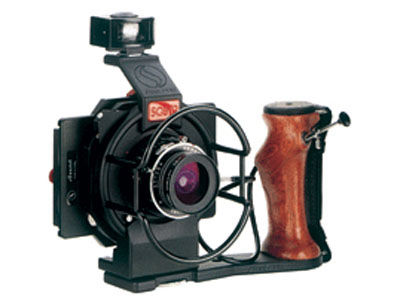
The production of the Silvestri cameras started in Florence, Italy, at the beginning of the eighties by the work of Vincenzo Silvestri who designed and developed the original project.
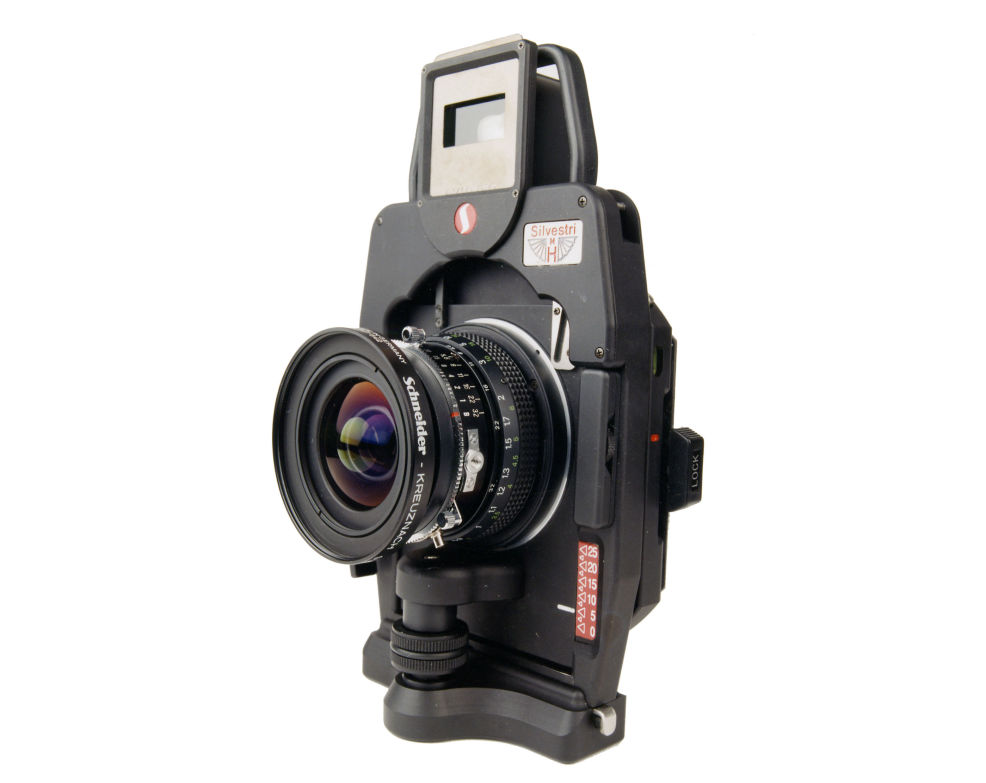
The intents were that of providing the photographers of architecture with a wide angle camera extremely compact and light-weight, compared to the large view cameras produced in that period, and with the essential movements for the perspective correction. The SLV was born with the 6X7 / 6X9 format, with a rotating back with click stop each 90 degrees and the lens, a Super Angulon 5,6/47mm in focusing helical mount by Schneider, was not interchangeable. The shift mechanism permitted a total rise or fall of 25mm, it consisted in a control knob and two counterposed screws right/left and allowed a precise setting and locking of the shift.
The attachment of the roll film back was Graflex compatible that opened the system to the application of various backs like Mamiya, Horseman, Wista, etc. The image viewing and the focusing were made on the ground glass by mean of a magnifying lens in a leather bellow.
The whole camera structure was made in anodized aluminium worked with CNC machineries, ensuring constructive exactness and reliability.
Pratically the SLV camera allowed to shift in any direction by simply placing and levelling the back horizontally or vertically and by orienting the camera body leaning it to the right or left, or upwards or up side down.
Some samples of this first model were made in an almost handcraft way but meeting a good interest among the specialized photographers, Silvestri was pushed to develop a new and improved model of SLV.
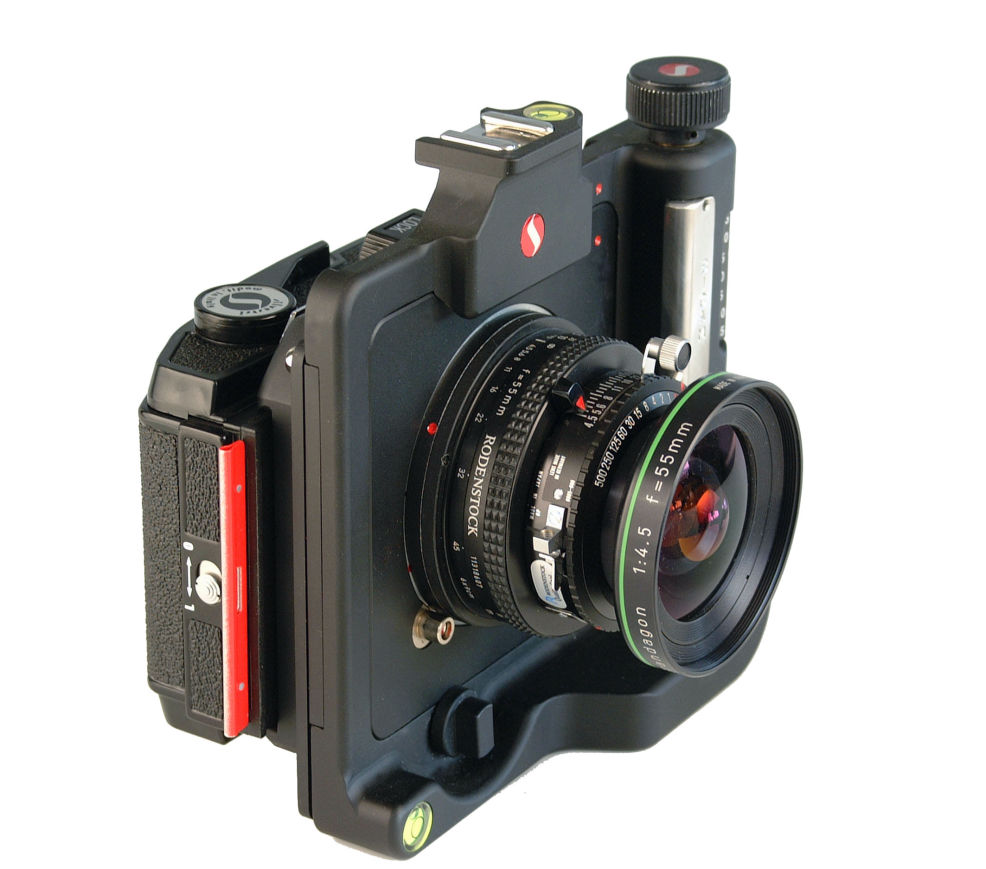
This second model had a bayonet for attaching the lenses and an interchangeable system for the backs.
This gave the SLV a major extension and flexibility and the range of lenses grew to 3 Schneider lenses: Super Angulon 5,6/65mm, Super Angulon 5,6/75mm and Symmar 5,6/100mm, beside the Super Angulon 5,6/47mm, all lenses had a bayonet attachment and a focusing helical mount. The interchangeable backs allowed to insert the extension rings to compensate the difference in focal distance among the various lenses. The 4 points of 8° attachment, quick and precise to use, also accepted backs of different formats like the 6x12cm and the 4x5”.